Food & Culture
Moroccan Couscous: The Landscape Behind the Dish
Most articles about Moroccan couscous start in the kitchen. This one starts in the fields, because couscous isn’t…
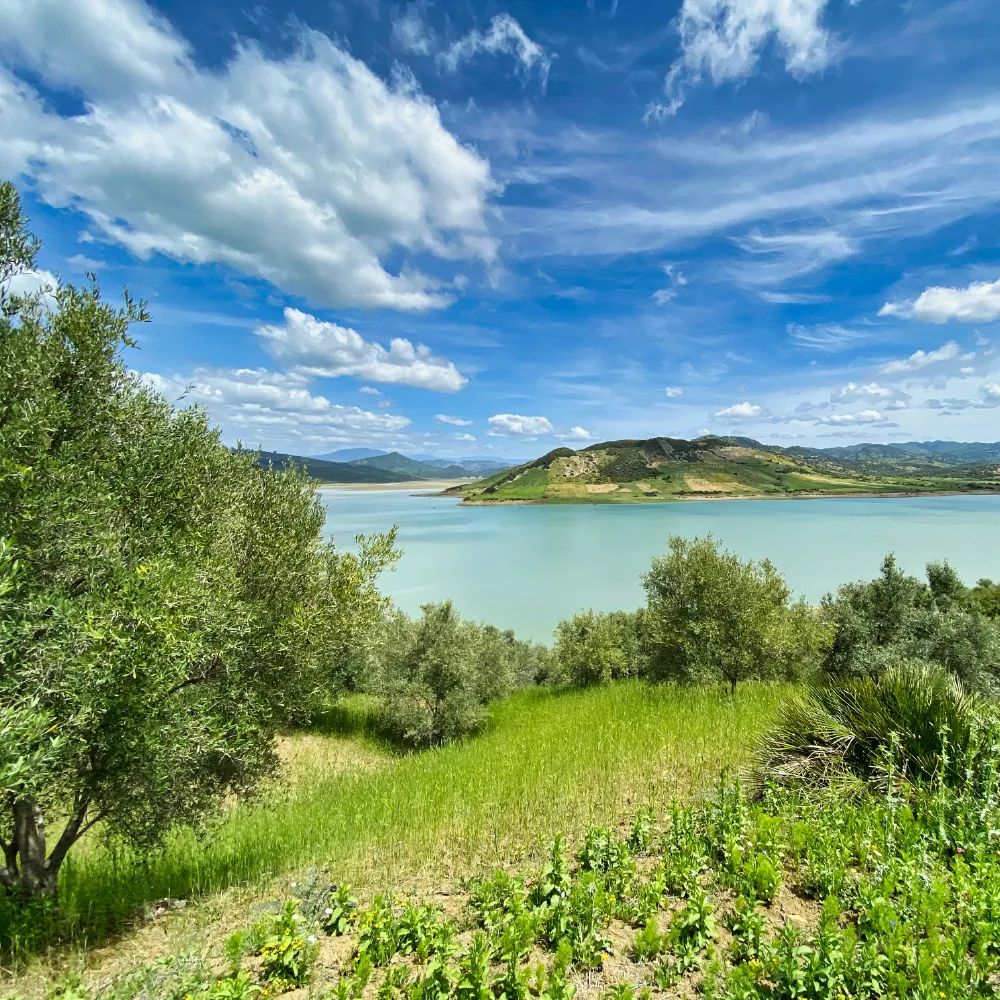
Snowmelt fills the rivers, the hills turn green and the olive groves come alive. The best all-round season to be outside in Morocco.
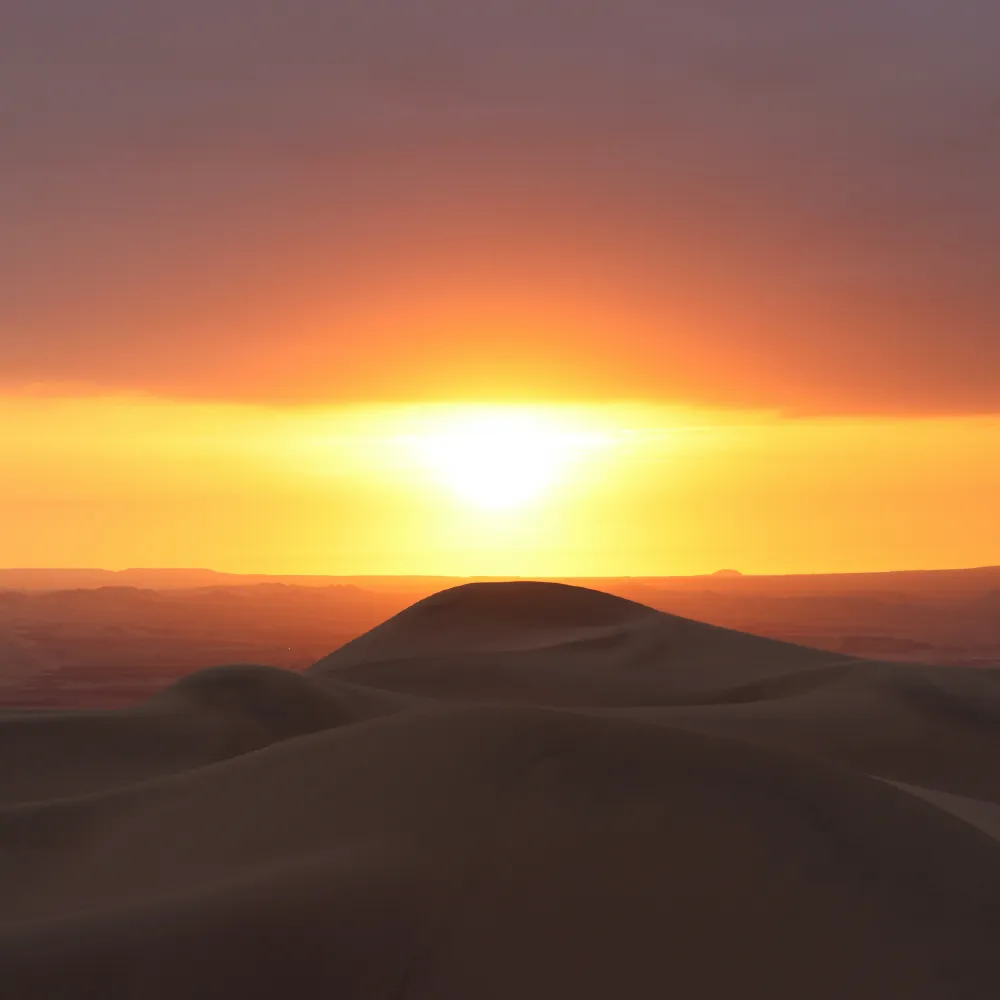
Inland it is fierce, so the country moves to the coast and the high mountains. In the Sahara, everything happens after the sun goes down.
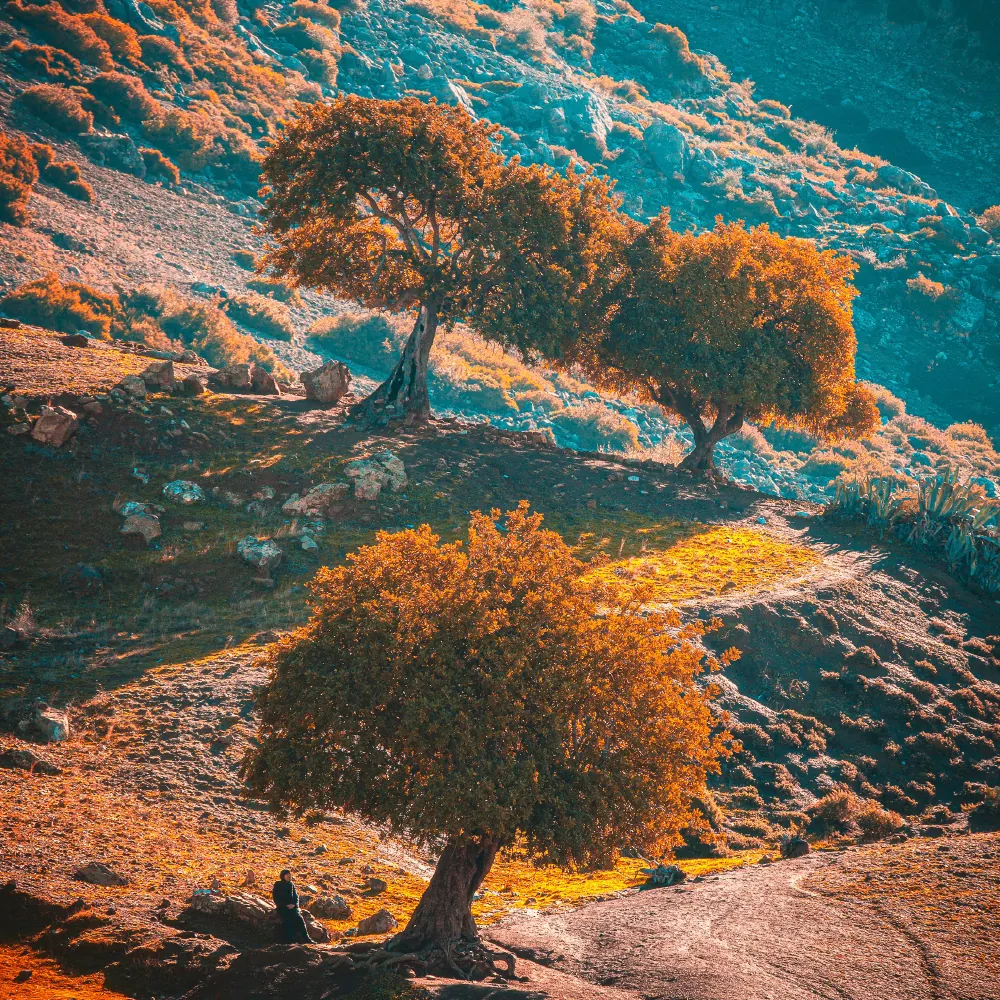
The crowds thin, the heat breaks and the hillsides turn gold. Quietly the busiest season of all for the people who work the land.
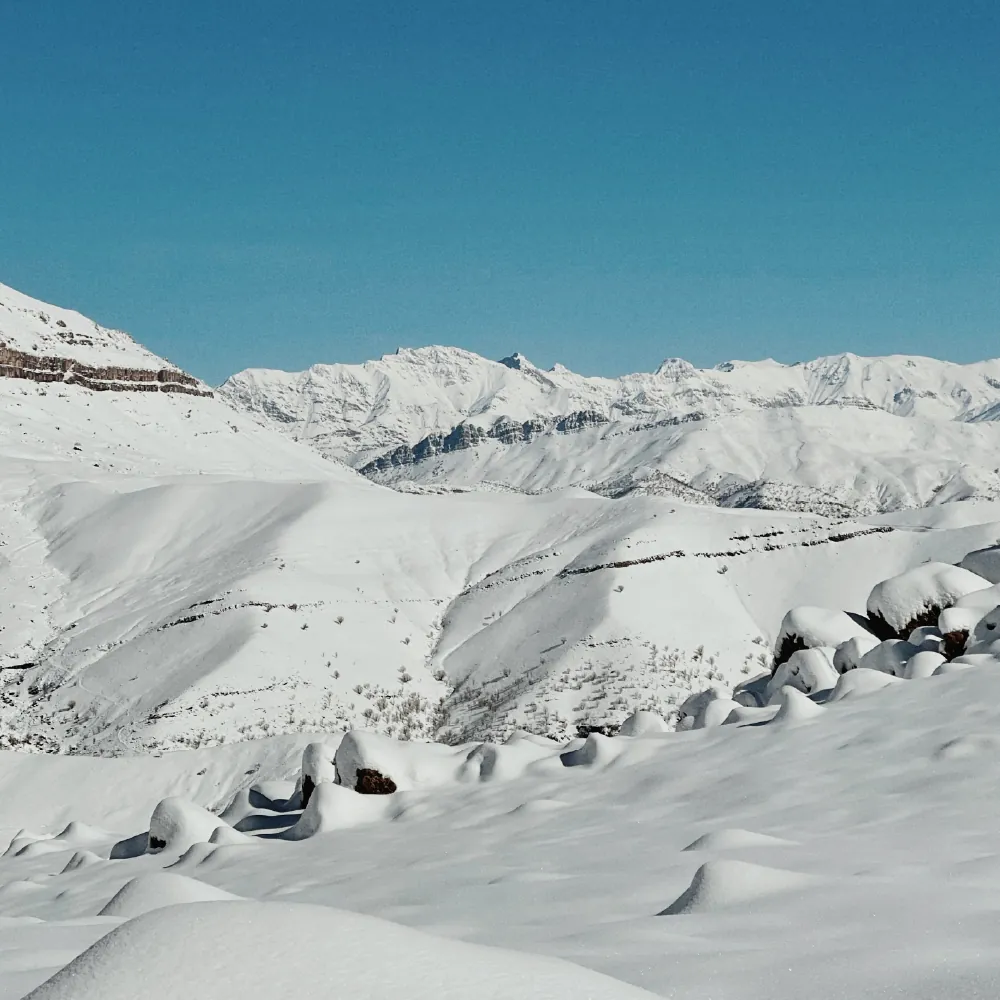
Yes, it snows here. The High Atlas turns white while the coast stays mild and the desert nights give the clearest skies of the year.
Most people book a Morocco tour around a list of cities. We build ours around what the country is actually doing the week you arrive.
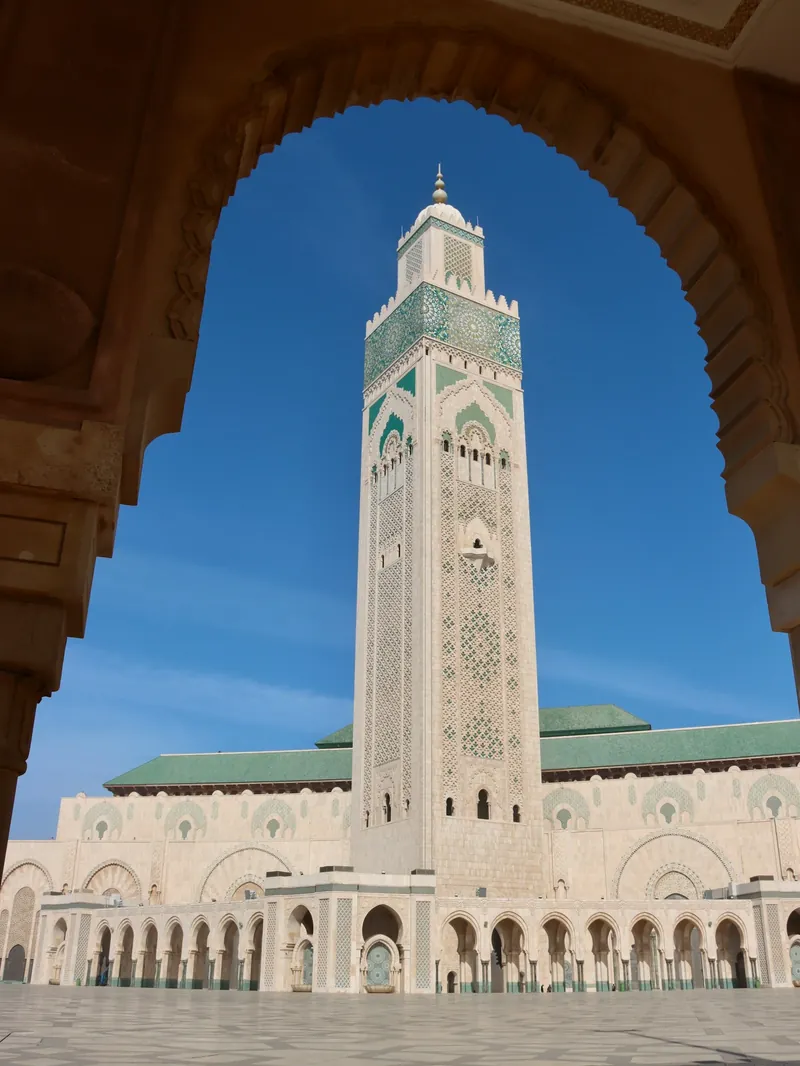
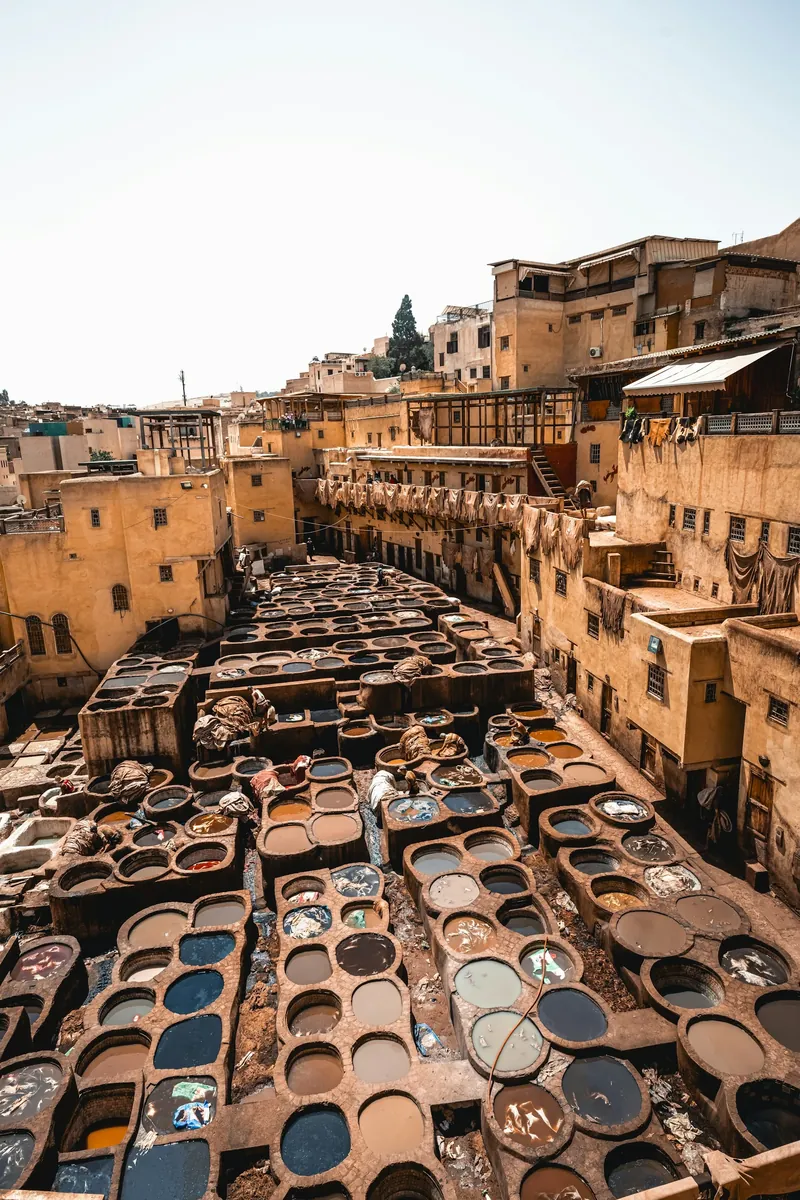
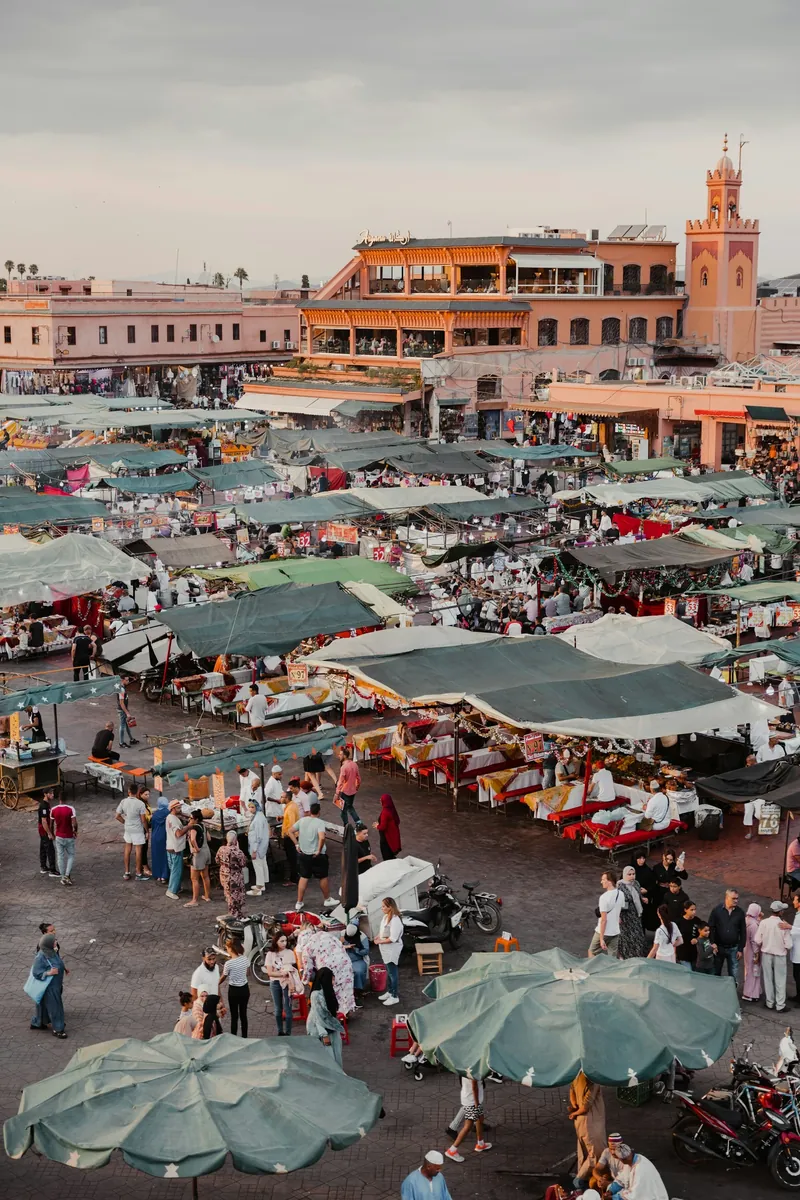
The imperial cities and their medinas. Roman ruins at Volubilis, kasbahs along the old caravan roads, the blue lanes of Chefchaouen, and the dunes of Erg Chebbi. Food, culture, and the practical advice you actually need before you fly.
Cities, monuments & travel tips → 02Three mountain ranges, two coastlines, cedar forest with wild monkeys, waterfalls and oases fed by tunnels dug centuries ago. Roses in May, argan in summer, dates and saffron in October, olives in November.
Seasons, harvests & wild places →
Most people booking a Morocco tour picture the Sahara. Morocco is a country roughly the size of Spain with two coastlines, three mountain ranges, cedar forest, oases, waterfalls and a great deal of farmland. The desert is the southern edge of it, not the whole thing.
You can ski in the High Atlas in the morning and stand in a palm oasis by evening. There are wild Barbary macaques an hour from Fes, and a stretch of Atlantic coast that holds almost the entire wild population of one of the world’s rarest birds.
The Rif, the Middle Atlas and the High Atlas. Snow in winter, walking from April, and villages built into terraced hillsides.
Palm groves fed by khettara — underground channels dug by hand centuries ago — drawing green lines through the pre-Sahara.
Cedar forest in the Middle Atlas with wild Barbary macaques, and lagoons where flamingos winter.
Roses, argan, dates, saffron, apples, olives and citrus — the working year that runs underneath everything.
Most articles about Moroccan couscous start in the kitchen. This one starts in the fields, because couscous isn’t…
Morocco is small enough to cross in a week and varied enough that no single itinerary covers all…
Every spring, a roughly 30-kilometer stretch of the Dades Valley in southern Morocco turns pink. This is the…
We are working on a different way to experience this country — one built around Morocco’s nature and its seasons.
It is not open yet. If you would like to hear about it first, follow along in the journal.
Explore Morocco Nature →Morocco has four main international airports — Marrakech, Casablanca, Fes and Tangier — spread across opposite ends of the country. Rather than making everyone connect through one city first, every itinerary is built to start wherever you actually land.
That also changes the route itself, not just the starting point. Fly into Tangier and the trip opens with the north — Chefchaouen, the Rif. Fly into Marrakech and it heads straight for the desert side. Same country, a different order, depending on your gateway.
In the booking form, the list of trips changes to only show routes that actually start there.
Trips are grouped by length, from a few days to two weeks and beyond.
It sits right next to the city field in the form — answer a few quick questions and it fills in a suggested city and length for you.
We confirm within a day and shape the day-by-day plan around your pace.
Marrakech, Casablanca, Fes or Tangier — pick where you land and we will build the route around your dates. Your own driver-guide, your own pace, and honest advice about what suits the season.